Monday, June 14, 2021

Daddy Long Legs--Discussion II

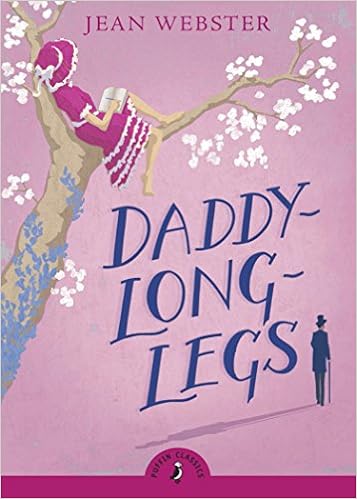
Daddy-Long-Legs (Puffin Classics): Webster, Jean, Ibbotson, Eva ...Please finish reading Daddy Long-Legs.  

This is another of my favorite books, and I think many English professors would be surprised how many people find this 100 year-old-book appealing.   There was a stage version produced shortly after it was written. Somewhat later, there was a film version, and then another film version with Astaire that, while a fine movie, isn't even close to the book.

There are two different Indian movies based on the book, and a cute 40 episode (!) animated Japanese version of the story.  There's also a recent musical version of the story.  NSU put on a great version of the musical last summer with Emma Glover playing Jerusha and Mac Bruemmer playing Jervis.

How would you explain the wide-spread popularity of Jean Webster's story?  Do you think Tolkien would regard the ending as a good example of eucatastrophe?  Will you read this book again, or recommend it to others?


Daddy Long Legs--Discussion I

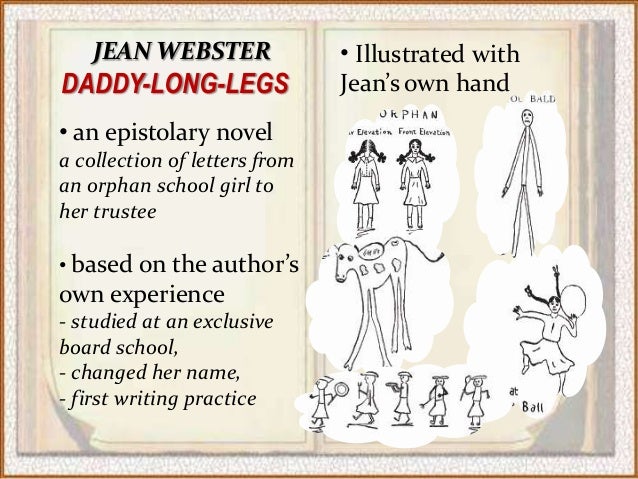
JEAN WEBSTER                • Illustrated withDADDY-LONG-LEGS                Jean’s own hand• an epistolary novela collect...Please begin Daddy Long Legs.  I'd love for you to finish half the book, but I prefer quality to quantity.  Read at a pace that allows you to enjoy the book.

Please tell me what you think of the book so far.  Is this a book you'd include as a "must read" for everyone?  Why, or why not?

Leaf by Niggle


See the source imageTolkien's "On Fairy Stories" is an academic essay.  Academics tend to be better at analyzing the creative works of others than at putting into practice themselves some of the techniques they admire.   

But what about Tolkien?  How well does he do at practicing what he preaches?

Pplease read "Leaf by Niggle" (pp. 100-120 in the Tolkien Reader). What elements of recovery, escape, and consolation do you see here?  Do you see an attempt at "eucatastrophe" here?  Does it work for you or not?

This is a story that I read over and over again.  Is it a story you are likely to come back to and/or to recommend to others?  Why, or why not?

Tolkien "On Fairy Stories"


See the source imagePlease read pp. 68-90 of the Tolkien Reader (part of Tolkien’s essay “On Fairy Stories").  Then take any fantasy story you like (a favorite fairy tale, a Terry Pratchett novel, one of the Harry Potter books, or something like the movie Willow) and try to find in it some of the “secondary creation” techniques Tolkien mentions in his essay. 

Does the author do an effective job creating a believable “Secondary World” or not?  Does the writer address the “recovery, escape, consolation” themes Tolkien thinks are an important part of fantasy?  Is there a “eucatastrophe," a total (perhaps unexpected, but entirely appropriate) turn around for the better? 

Farmer Giles of Ham

Image result for farmer giles of hamAs far as colleges and high schools are concerned, it's mostly the "dystopian" stuff from the 20th century (and now the 21st century) that makes it's way into the "canon," the books that instructors feel every student should read and that continue the "Great Conversation."  Students read Brave New World, 1984, and Lord of the Flies, books that take a dim view of human life and human nature.  In terms of literary quality, though, there are lots of modern books equal or better to the dystopian novels and that have a more positive world view.  J.R.R. Tolkien's books especially are both wonderfully written, and, while they recognize the strength of "the dark side," they tend to end up with more positive conclusions. 

Please read Tolkien's "Farmer Giles of Ham," (pp. 121-187 of the Tolkien Reader). In your comment here, either make the case that Farmer Giles is a "must read," the kind of book that should have a place in the academic canon, or that Farmer Giles somehow comes up short.  If you want to balance the two positions, that's fine too.  You might consider the ideas/values reflected in the story, the emotional impact of the story, the literary quality of the story, or any other factor you think makes the story worthy/unworthy of a place in the canon.

Wednesday, June 9, 2021

My top books


See the source image
Suppose you had a friend who had fairly narrow reading tastes and decided that they should broaden their horizons.   Please list here 10-15 "must read" books, books you think everyone should read at least once.  Then take your top three books and explain why you think these books are "must reads."

Thursday, May 27, 2021

How to Slay a Dragon--Or at Least Keep from Being Toasted

Skim through any portion of Dragons, History Professors, and Other Hazards of College Life that you have not yet read, and read more carefully the last two chapters.   Of the advice given in these chapters, does anything surprise you? Of the familiar principles, what seems to you to be particularly worth reinforcing?

Readings, Exams, Papers


Please read my study skills advice in Units V, VI, and VII of Dragons.

These chapters offer advice on how to approach college reading assignments, exams, and papers.  If you were Polonius and trying to give advice to a son or daughter headed off to college, what bit of advice from these chapters would you be most likely to include? Why? [Remember: Polonius' advice usually sounds good, but it isn't necessarily all that helpful....though it might be!]

Note well how to note well


Please read Chapter IV of Dragons. Of the note-taking advice here, what do you think will be most important for you personally?  Are you persuaded that taking notes by hand is really better than using a laptop?

Does Anybody Really Know What Time Management Is?

Please read Chapters III of Dragons. Of the planning and time management ideas here, what do you think will be most important for you personally? In which of these areas are you already fairly strong? Where do you need work?

How to find what you are not looking for

Please read Chapters I and II of Dragons, History Professors, and Other Hazards of College Life. There's a lot of advice in these two chapters, much that you've heard before, plus (perhaps) a few things you hadn't. What (if anything) in these chapters surprises you? Of the familiar advice, what seems worth reinforcing? Is there anything you would have added to the chapter if you were giving college success advice?

Welcome!

Dragon trouble? The guy on the white horse just may be on this blog! Harry the Talking Hand sometimes stops by as well. Feel free to share your questions, comments, and/or advice about life at NSU.

Just about every class day, there will be a short assignment on this blog asking you to post your thoughts on the IDL class and NSU in general. It might be good to make yourself a blog "follower" so that you are aware of each assignment as soon as it is posted.

To get started, here's a test of the blog process.  Click on the "comments" post below and, in the box that opens up, comment on one thing that's made you happy in the last couple of weeks.

You can post as an "anonymous" blogger if you like, but, if you do, be sure to put your name after the post so I know who to give credit to.